

Quick answer: when does an aging parent need in-home senior care in Maine?
An aging parent likely needs in-home senior care when daily tasks meals, medications, bathing, or getting around are becoming unsafe or unmanaged on their own. In Maine, where winters are isolating and most towns require a car, the need often shows up before families expect it.
- Skipped meals or an empty, expired refrigerator
- Medications being missed, doubled, or taken incorrectly
- Falls, near-falls, or new fearfulness about moving around
- Home becoming harder to maintain laundry, dishes, cleaning
- Noticeable changes in personal hygiene or grooming
- Withdrawal from social life, activities, or regular phone calls
- Driving has become unsafe but the town requires a car
- Family spending every call managing worry rather than having a conversation
If your aging parent needs in-home senior care in Maine, the signs are almost never sudden they build quietly over weeks or months before most families are ready to act on them. You notice it during a visit: the refrigerator is nearly empty, your parent moves more carefully than before, or a familiar sharpness in their conversation has gone slightly flat.
This guide is written by an Apex Home Care caregiver serving Cumberland County to help Maine families recognize the real warning signs early, understand what non-medical home care actually involves, and take the right next step before a health crisis forces the decision.
Most families wait too long. Not because they don’t care but because each individual sign seems explainable on its own. What I’ve learned in years of walking into homes across Scarborough, Westbrook, Portland, and Falmouth is that the pattern matters more than any single moment.
The families who act before the crisis almost always report better outcomes: their parent stays home longer, keeps more independence, and adjusts to support far more easily than someone thrown into care during a medical emergency. Here is what to watch for.
Table of Contents
What Does It Actually Mean When a Senior “Needs Care”?
The phrase “needing care” carries a lot of weight for families. It can feel like an ending—a line you cross and can’t come back from. But when an aging parent needs in-home senior care in Maine, it isn’t about taking over. It’s about filling the specific gaps that are making daily life harder, riskier, or lonelier than it should be.
According to the CDC, falls are the leading cause of injury among older adults and most are preventable with proper in-home support. Non-medical home care directly addresses the conditions that lead to those falls: mobility challenges, medication errors, isolation, and neglected daily routines.
The goal of in-home senior care in Maine is always to help your aging parent remain safely in their own home, surrounded by the community they know and the life they’ve built, for as long as possible.
8 Signs Your Aging Parent Needs In-Home Senior Care in Maine
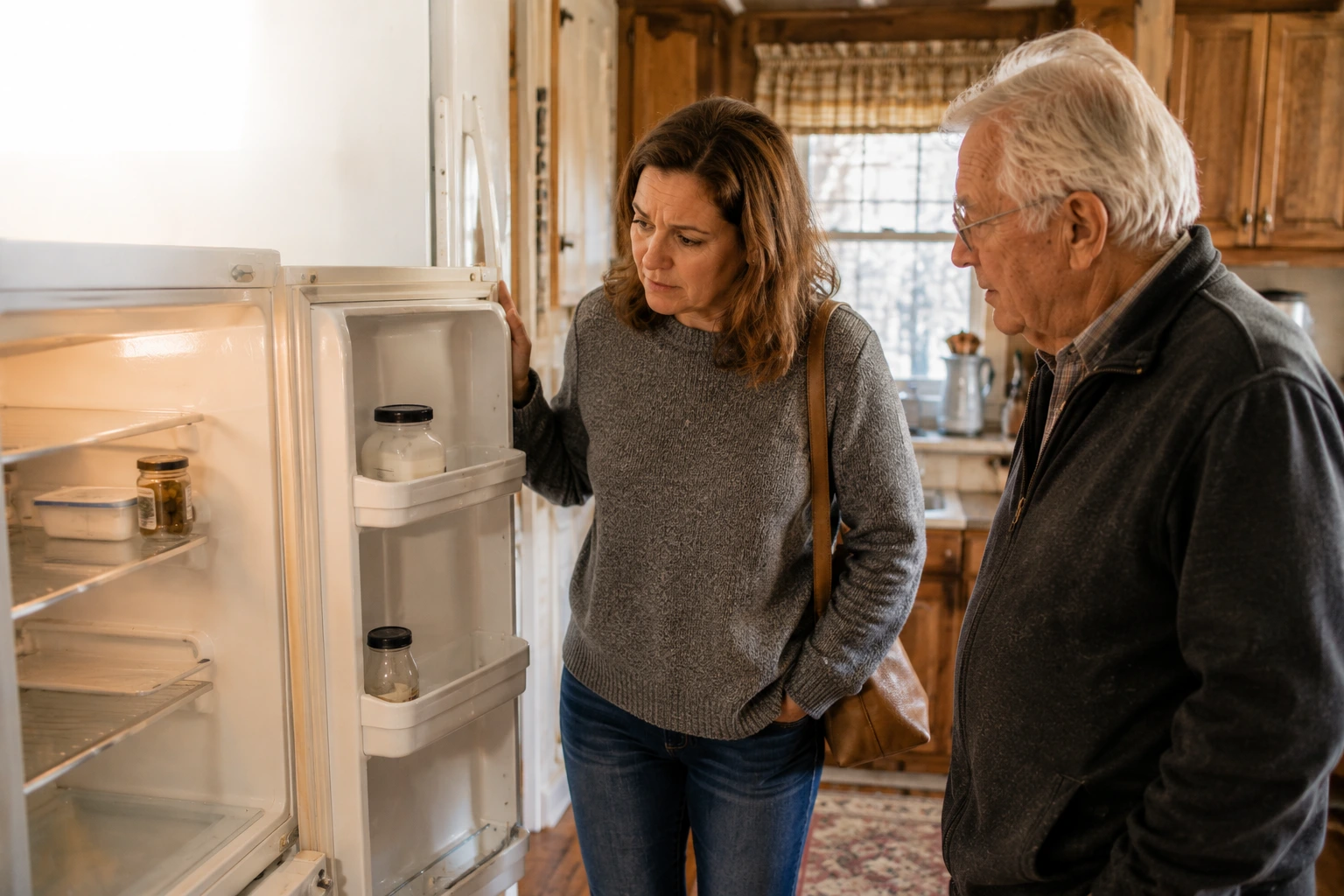
1. Is the Kitchen Telling You Something?
Walk into the kitchen during a visit. Open the refrigerator. Sixty seconds in there tells you more than an hour of conversation.
Expired food. Empty shelves. Evidence that your parent is surviving on cereal or crackers because cooking has become too difficult. Skipped meals aren’t just a nutrition issue they accelerate cognitive decline, worsen chronic conditions like diabetes and heart disease, and signal that daily living is becoming unmanageable.
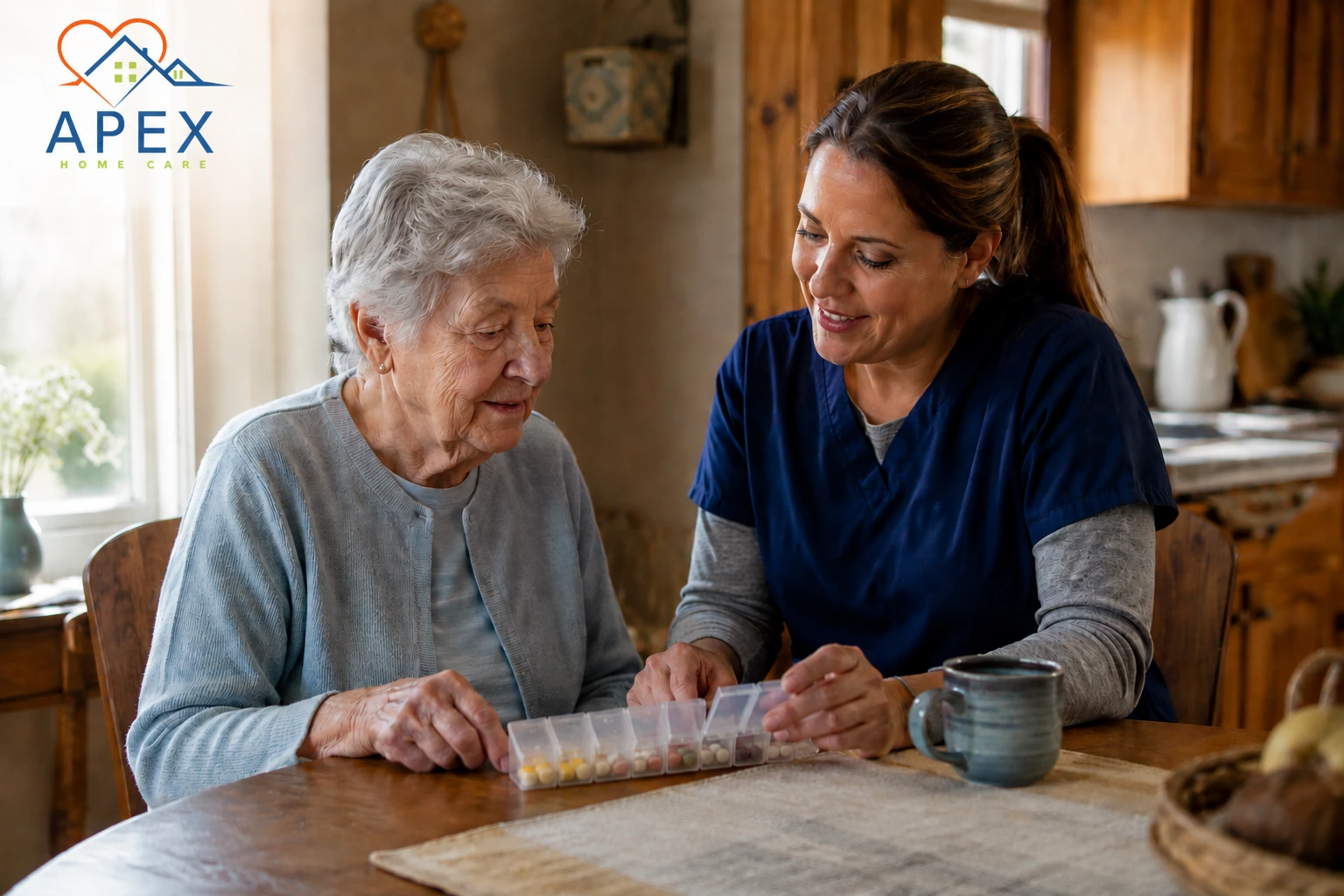
2. Are Medications Being Missed or Taken Incorrectly?
Seniors in Maine whose aging parent needs in-home senior care in Maine often manage eight to twelve medications, each with different timing, food requirements, and interaction risks. When cognitive sharpness or energy declines, this complexity becomes genuinely dangerous.
Pills untouched in the weekly organizer. A prescription that ran out two weeks ago. A nighttime medication taken in the morning. These errors are common and have serious health consequences. If you’re unsure, ask your parent to show you their medications what you observe will tell you a great deal.
3. Have There Been Falls or New Fearfulness About Moving?
The fall itself is often not the first sign. The fear of falling is. A parent who now grips furniture crossing the living room, avoids the bathroom at night, or casually mentions “almost losing their footing” in the shower that behavioral shift is the warning, not the event.
Fear of falling shrinks a senior’s world. It reduces activity, accelerates physical decline, and often goes unaddressed for months before a serious fall occurs.
4. Is the Home Harder to Maintain Than It Used to Be?
Laundry in the bedroom for weeks. Dishes sitting in the sink. A bathroom that hasn’t been cleaned in a month. For a parent who kept an immaculate home for fifty years, this is not laziness.
It’s fatigue, pain, or early cognitive decline making previously effortless tasks feel overwhelming. And a home that isn’t maintained becomes unsafe quickly fall hazards build up, food safety becomes a risk, and the senior’s sense of dignity erodes alongside it.
5. Have Personal Hygiene or Grooming Habits Changed?
This is one of the hardest signs for families to acknowledge. Wearing the same clothes for multiple days, infrequent bathing, or a noticeable decline in grooming are often clear signs that an aging parent needs in-home senior care in Maine because personal care has become physically difficult.
Bathing requires strength, balance, and coordination. When those decline, the task becomes risky and exhausting. Most seniors won’t volunteer this information they’re protecting their dignity. A professional caregiver handles personal care with complete matter-of-factness, which many seniors find far easier than accepting help from an adult child.
6. Is Your Parent Withdrawing from Life?
Maine winters are isolating even for healthy, mobile seniors. But when a parent stops calling friends, drops out of activities they once loved, or seems noticeably flat during conversations that’s a different kind of withdrawal.
Research from the National Institute on Aging links prolonged social isolation in seniors to accelerated cognitive decline, increased depression risk, and measurable physical health effects. Isolation is not a mood it’s a medical concern.
7. Has Driving Become a Problem but the Town Requires a Car?
In towns like Scarborough, Falmouth, Windham, and Gorham, losing the ability to drive safely isn’t an inconvenience—it’s a near-total loss of independence. There’s no subway and no reliable bus route through most residential neighborhoods.
When an aging parent needs in-home senior care in Maine, dependable transportation for medical appointments, grocery shopping, and other essential errands becomes a critical part of helping them remain independent at home.
New dents on the car. Reluctance to drive after dark. A parent who has quietly stopped going places they used to go. These are signals worth taking seriously and transportation support is a core part of what in-home caregivers provide through Apex’s senior care services.
8. Are You Spending Every Phone Call Managing Worry?
This sign is about you. If most calls with your parent end with anxiety rather than reassurance if you’re checking in daily and still not certain everything is okay your instincts are picking up on something real.
Long-distance family caregiving is exhausting in a way that doesn’t turn off when you hang up. The worry you’re carrying is usually proportional to a genuine pattern, even if you can’t articulate exactly what it is yet.
What Does In-Home Senior Care in Maine Actually Include?
Non-medical home care what Apex Home Care provides is different from home health or nursing services. It covers everything that makes daily life safe, manageable, and socially connected:
- Personal care — bathing, dressing, grooming, mobility support, fall prevention
- Companion care — conversation, activities, errands, reducing isolation
- Meal preparation — nutritious meals matched to dietary needs and preferences
- Light housekeeping — keeping the home safe, clean, and manageable
- Medication reminders — ensuring medications aren’t missed or doubled
- Transportation — appointments, pharmacy runs, errands
- Post-hospital support — recovery care after discharge from Maine Medical Center or other facilities.
- Respite care — scheduled relief for family caregivers.
All care is non-medical and fully customized no rigid packages, no one-size schedule.When an aging parent needs in-home senior care in Maine, personalized support makes all the difference. According to the Administration for Community Living, seniors who receive home and community-based services are significantly more likely to maintain independence and avoid premature nursing facility placement. Care built around the person their routine, their preferences, their personality is what produces that outcome.
Common Mistakes Families Make When Recognizing the Need for Care
Waiting for a single dramatic sign
Most families expect a clear moment a serious fall, a hospitalization that makes the decision for them. But by the time that moment arrives, the need has usually been present for months. Patterns of small signs are more reliable than waiting for a crisis.
Assuming the parent will ask for help
Seniors rarely self-report decline. They don’t want to worry their children, lose independence, or acknowledge what they’re experiencing. Families need to watch behavior, not wait for disclosure.
Treating home care as a last resort
Home care is not what you choose when you can’t make the “real” decision. For most seniors, staying in a familiar home with personalized support produces better cognitive, emotional, and physical outcomes than institutional transition. Earlier is almost always better for the senior and for the family.
Frequently Asked Questions
1.How do I know if my aging parent needs in-home senior care or a facility?
If your parent can live at home safely with added support help with meals, bathing, medication reminders, or transportation home care is almost always the better option. Facilities are generally appropriate when 24/7 medical supervision is required. A free Apex consultation can help clarify which level of support fits your parent’s situation.
2.What if my parent refuses help?
Start small and frame it as company, not care. Most seniors accept a companion caregiver more readily than a personal care aide. Once a relationship forms, the scope of support can expand naturally. Framing the first visit as a trial “just to see how it goes” removes the permanence that makes refusal feel necessary.
3.How quickly can in-home senior care start in Maine?
Apex Home Care can typically start services within a few days of the initial consultation. For urgent situations hospital discharge, recent fall we move as quickly as possible. Call 207-329-1626 to discuss your timeline.
4.Does Medicare cover in-home senior care in Maine?
Standard Medicare does not cover non-medical home care. MaineCare (Maine’s Medicaid) may cover certain in-home services for eligible seniors. Many long-term care insurance policies do cover it. Apex can help you understand your options at no charge.
5.Can we start with just a few hours a week?
Yes that’s how most families begin. No minimum hours, no rigid package. Apex builds care plans around exactly what your parent needs and adjusts as needs change over time.
6.What areas of Maine does Apex Home Care serve?
Apex is based in Westbrook and serves all of Cumberland County including Scarborough, Portland, Falmouth, South Portland, Windham, and Gorham. Call 207-329-1626 or contact us online to confirm availability in your area.
7.How do I start the conversation with my parent about getting help?
Lead with one specific concern, not a list. “I noticed the medications looked disorganized and I want to make sure you’re okay” lands better than a general “I think you need help.” Propose a trial visit rather than a permanent arrangement. Most seniors who resist initially come around after the first caregiver visit.
8.Is in-home care better than assisted living for most seniors?
For seniors who don’t require 24/7 medical supervision, home care consistently produces better outcomes greater cognitive function, stronger emotional well-being, and a clearer sense of identity. Read our full comparison: Home Care vs. Assisted Living in Maine.
The Right Time to Act Is Before You’re Certain
If you’ve read this far, something brought you here. Trust that instinct. The families who reach out before the crisis are almost always glad they did not because home care solves everything, but because having a plan in place makes every decision that follows calmer and more centered on what’s actually best for your parent.
Apex Home Care serves families across Scarborough, Westbrook, Portland, Falmouth, South Portland, Windham, Gorham, and all of Cumberland County. Local caregivers, personalized care plans, and a first conversation that’s completely free and completely without pressure.
Call 207-329-1626 or contact us online to schedule your free consultation. We’ll listen, answer honestly, and help you figure out the right next step.
Also helpful for Maine families:
- In-Home Care for Seniors in Maine — Complete Guide
- Companion Care for Seniors in Maine
- Personal Care Services for Seniors
- Family Caregiver Support in Maine
- Senior Home Care in Westbrook, ME
Apex Home Care — Trusted non-medical in-home senior care across Cumberland County, Maine. Based in Westbrook, ME. Call 207-329-1626.